



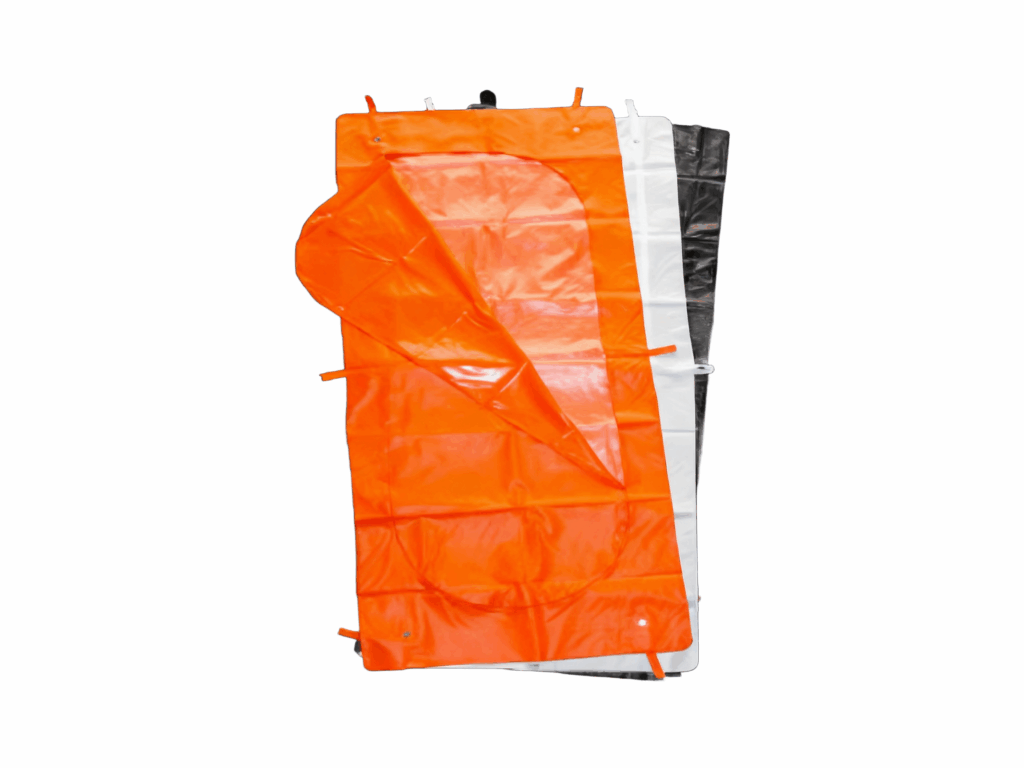
In the death care and emergency management industries, selecting the right post-mortem bags (body bags) involves balancing durability, cost, regulatory compliance, and environmental impact. For decades, traditional plastics dominated the market. However, modern shifting regulations and a growing focus on green burial practices have introduced more advanced material options.
When evaluating your inventory, the decision typically comes down to three primary materials: Polyvinyl Chloride (PVC), Polyethylene Vinyl Acetate (PEVA), and Polyolefin.
Choosing the wrong material can lead to storage complications, crematory equipment damage, or failure to meet local environmental standards. This comprehensive breakdown compares PVC vs. PEVA vs. Polyolefin body bags to help your facility make an informed, compliant choice.
1. Polyvinyl Chloride (PVC) Body Bags: The Traditional Heavyweight
Polyvinyl Chloride, commonly known as PVC, has long been the industry standard for heavy-duty disaster pouches and standard cadaver bags.
Performance and Durability
PVC is exceptionally strong, highly resistant to punctures, and completely waterproof. Its rigid molecular structure makes it ideal for high-capacity, high-tensile strength applications—such as multi-handle disaster pouches designed for rugged terrain or search-and-recovery operations.
The Downside: Environmental and Operational Drawbacks
While PVC excels in physical durability, it poses significant challenges for modern facilities:
- Cremation Risks: When burned, PVC releases highly corrosive hydrochloric acid gas and toxic dioxins. This can severely damage crematory retort linings, violate local EPA emissions standards, and pose health risks to operators.
- Chlorine Content: Because it contains chlorine, PVC is increasingly restricted or banned in modern crematories and green cemeteries.
- Cold Weather Brittleness: Standard PVC tends to stiffen and can crack in extreme cold or long-term refrigeration units unless treated with specialized plasticizers.
2. PEVA Body Bags: The Eco-Friendly, Cremation-Safe Alternative
Polyethylene Vinyl Acetate (PEVA) is a non-chlorinated plastic that has rapidly become the preferred alternative to traditional PVC in modern mortuary settings.
Why Facilities are Switching to PEVA
PEVA offers a unique balance of durability and environmental compliance, resolving many of the operational bottlenecks associated with PVC:
- 100% Chlorine-Free: Because PEVA contains zero chlorine, it burns cleanly during cremation without releasing harmful dioxins or corrosive gases. This makes it universally accepted by crematories and eco-conscious cemeteries.
- Excellent Cold-Flexibility: Unlike PVC, PEVA maintains its flexibility and soft texture even at freezing temperatures, preventing cracking during long-term cold storage.
- Biodegradable Properties: PEVA breaks down more efficiently in soil over time compared to highly resilient PVC, making it suitable for standard burial practices.
Considerations for Use
PEVA bags generally feature heat-sealed seams that offer excellent leak resistance. While slightly less rigid than heavy-duty PVC, premium-gauge PEVA body bags provide more than enough tensile strength for standard hospital, morgue, and funeral home transport needs.
3. Polyolefin Body Bags: The Next-Generation Lightweight Powerhouse
Polyolefin is an advanced thermoplastic polymer family that includes polyethylene (PE) and polypropylene (PP). In post-mortem applications, polyolefin represents the cutting edge of high-performance, green-friendly containment.
Maximum Strength with Minimal Weight
Polyolefin body bags are engineered using state-of-the-art co-extrusion technology. This results in a material that is significantly lighter than PVC or PEVA, yet boasts incredible puncture and tear resistance.
Key Benefits of Polyolefin:
- Zero Toxic Emissions: Polyolefin is composed entirely of carbon and hydrogen. When incinerated, it breaks down cleanly into carbon dioxide and water vapor, leaving no corrosive residue or toxic air pollutants behind.
- Superior Chemical Resistance: This material is highly inert, meaning it offers exceptional resistance to bodily fluids, chemicals, and degradation.
- Exceptional Environmental Footprint: Polyolefin requires less raw material to manufacture while delivering equal or superior strength to heavier plastics, reducing shipping weight and overall environmental impact.
| Material Feature | PVC (Polyvinyl Chloride) | PEVA (Polyethylene Vinyl Acetate) | Polyolefin (PE / PP) |
| Cremation Safe? | ✗ No (Releases toxic chlorine gas) | ✓ Yes (Chlorine-free, clean burn) | ✓ Yes (Breaks down to $CO_2$ and $H_2O$) |
| Cold Storage Performance | Poor (Can become brittle/crack) | Excellent (Remains flexible) | Excellent (Highly stable) |
| Environmental Impact | High (Non-biodegradable, toxic byproduct) | Low (Eco-friendly alternative) | Lowest (Minimal material, clean footprint) |
| Best Used For | Heavy-duty outdoor recovery | Standard mortuary and crematory use | High-performance, eco-compliant facilities |
Summary: Which Material is Right for Your Facility?
The right choice depends directly on your facility’s operational workflow, local regulations, and end-of-life choices offered to families:
- Choose PEVA if your facility processes a high volume of cremations, requires reliable cold-storage flexibility, and wants a cost-effective, universally accepted eco-friendly standard.
- Choose Polyolefin if you are looking for top-tier, lightweight material technology that offers maximum tear resistance with the absolute cleanest environmental and carbon footprint available today.
- Choose PVC strictly for specialized, non-cremation disaster recovery scenarios where extreme, rigid puncture resistance outweighs environmental or cremation concerns.
Frequently Asked Questions (FAQ)
Can you cremate a body in a PVC body bag?
No, it is highly discouraged and often illegal. Burning PVC releases toxic dioxins and corrosive hydrochloric acid, which damages crematory equipment and violates air quality regulations. Always use chlorine-free alternatives like PEVA or Polyolefin for cremation.
Are PEVA body bags biodegradable?
PEVA is considered significantly more eco-friendly and degradable than PVC because it contains no chlorine and breaks down more easily under environmental conditions. However, true degradation rates depend on soil conditions and the thickness of the material.
What does “chlorine-free” mean in post-mortem bags?
Chlorine-free means the plastic formulation does not contain chlorine molecules. PVC contains chlorine, which produces harmful gases when burned. PEVA and Polyolefin are entirely chlorine-free, making them safe for incineration and cremation.
How do I prevent body bags from cracking in cold storage?
Ensure your inventory consists of PEVA or Polyolefin bags. These materials are chemically formulated to maintain their elasticity and flex-resistance at low temperatures, unlike traditional PVC which hardens and becomes prone to stress cracks when refrigerated.