In forensic work, a single identification error does not stay in the room where it happens. It travels — through the chain of custody, into the courtroom, across the autopsy report, and sometimes into a family’s worst moment. The documentation window on a heavy-duty vinyl forensic pouch is the one feature that sits at the intersection of legal compliance, operational efficiency, and staff error prevention. And it is still undervalued by a surprising number of procurement decisions.
This piece is for the professionals who understand that forensic pouch selection is not a commodity decision — medical examiners, forensic pathologists, law enforcement evidence coordinators, and hospital morgue managers who know that what goes on the outside of the pouch matters as much as what the pouch contains.
Here is what clear, purpose-built documentation windows do for your operation — and what their absence quietly costs you.
What a Documentation Window Actually Does in a Forensic Context
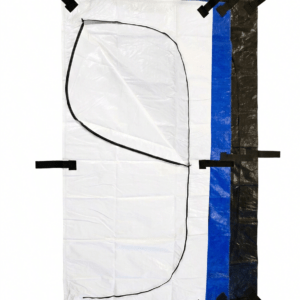
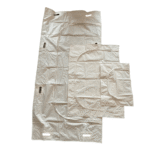
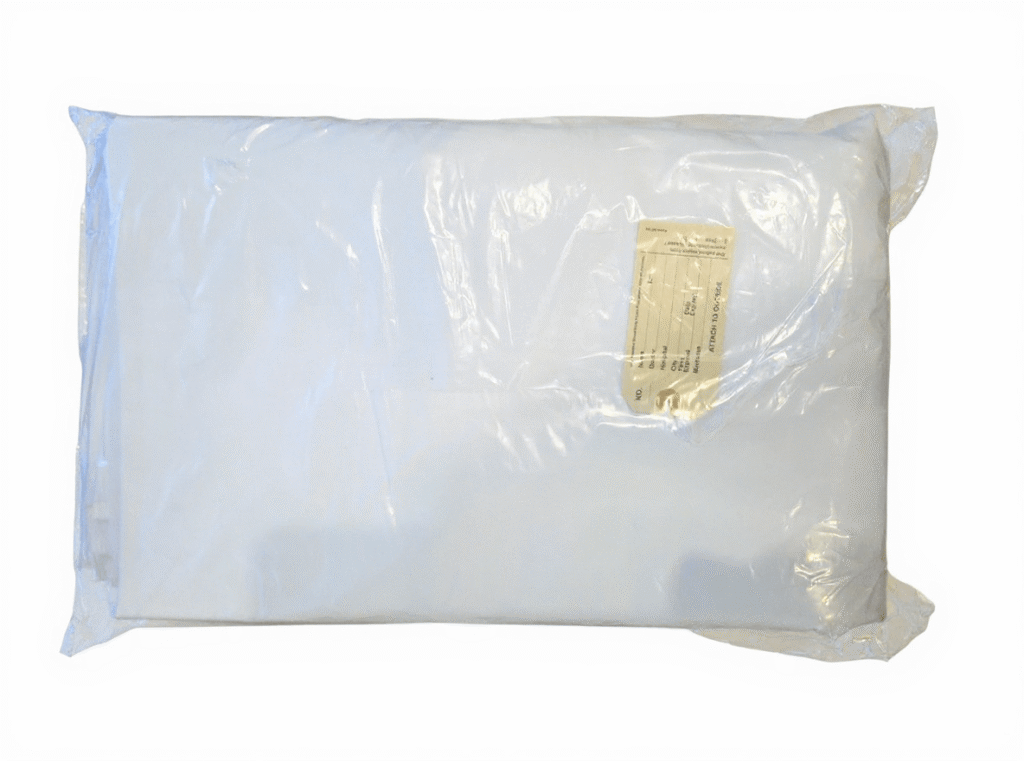
The documentation window is a transparent panel — typically a sealed, optically clear vinyl or polyester insert — integrated directly into the face of the forensic pouch. It is designed to hold a case identification card, toe tag, or printed label visible from the exterior without breaking the pouch seal or compromising containment.
That sounds simple. The operational reality is more layered.
Three Functions One Window Serves Simultaneously
- Chain of custody integrity: The case ID remains visible and verifiable at every transfer point — from scene to transport, transport to morgue, morgue to autopsy suite — without requiring the pouch to be opened or the seal to be broken
- Workflow efficiency: Staff can confirm identity, cross-reference case numbers, and sort cases visually without handling documentation separately or relying on external tags that detach, smear, or degrade
- Error prevention: A legible, permanently positioned ID panel reduces misidentification risk — one of the most serious and legally consequential errors in forensic case management
When all three functions work together, the documentation window is not a convenience feature. It is a systems component in your facility’s quality and compliance framework.
The Chain of Custody Case: Why Window Clarity Is a Legal Requirement in Practice
Chain of custody is a legal doctrine, not an administrative preference. Every forensic case — whether a homicide, an unattended death, a mass casualty incident, or a medical examiner referral — requires an unbroken, documented record of who had custody of remains, when, and under what conditions.
The documentation window directly supports that record. Here is where it becomes legally material.
Transfer Points Are Where Custody Breaks Happen
Every handoff is a vulnerability. Scene to transport vehicle. Transport to receiving facility. Receiving to cold storage. Cold storage to autopsy suite. Each transfer point is a moment where misidentification can occur — and where a documentation failure can introduce doubt into a legal proceeding.
- A documentation window that is fogged, scratched, or improperly sized for standard ID cards creates a forced interruption — staff must open the pouch or reattach external documentation to confirm identity
- External tags — toe tags, adhesive labels applied to the pouch exterior — detach during transport, smear in cold or humid environments, and are not considered a reliable chain of custody record by most medical examiner standards
- A sealed, internal documentation window that holds the ID card securely and legibly through all environmental conditions eliminates these failure points
What Prosecutors and Defense Attorneys Look For
In criminal cases, defense attorneys actively look for chain of custody irregularities. An identification discrepancy — even one that was corrected — creates a record of error that can be exploited in court. Medical examiners and forensic pathologists who testify regularly understand this. The documentation window is one of the physical controls that prevents those irregularities from appearing in the first place.
- Documented continuity: A visible, sealed ID that travels with the remains from point of origin to final disposition is the gold standard
- No-break protocol: The window allows visual verification without opening — preserving seal integrity and the evidentiary record
- Accreditation alignment: NAME (National Association of Medical Examiners) standards and ASCLD guidelines both emphasize identification continuity as a core quality metric
Operational Efficiency: What Poor Documentation Windows Cost Your Team Every Day
The legal case is clear. The operational case is just as compelling — and more visible on a daily basis. Forensic facilities processing high case volumes feel documentation window failures not in courtrooms, but in the workflow friction they create shift after shift.
The Hidden Time Cost of Inadequate Windows
- Label re-attachment: When external tags detach or external labels degrade, staff spend time re-documenting cases that should have been handled at intake — a 5-minute task per case compounds quickly in a busy facility
- Visual sorting delays: In cold storage with multiple cases, staff must physically handle pouches to confirm identity when windows are unclear, foggy, or improperly positioned
- Verbal confirmation loops: Facilities with poor documentation windows default to verbal confirmation between staff as a backup — an informal process that introduces its own error risk and is not documentable
- Re-entry interruptions: Opening a sealed forensic pouch to verify or update documentation is a containment event — it requires a new seal, creates a chain of custody notation, and adds time and material cost
What a Well-Designed Documentation Window Eliminates
- The need to open a sealed pouch for any identification-related reason prior to authorized examination
- Reliance on external tags or adhesive labels as a primary identification method
- Visual ambiguity in cold storage, transport, or multi-agency handoff scenarios
- The informal verbal confirmation workarounds that create undocumentable process gaps
What Separates a Purpose-Built Documentation Window From an Afterthought
Not all documentation windows are equal. The difference between a purpose-built window and a cost-cutting design decision shows up in real-world conditions — cold storage, humid transport environments, extended case timelines, and multi-agency handoffs.
Material Clarity and Optical Performance
- Optical-grade vinyl or polyester insert: maintains clarity across temperature ranges from cold storage (28°F to 34°F) to ambient transport environments without fogging, yellowing, or hazing
- Surface smoothness: textured or embossed window materials scatter light and reduce label legibility — especially under the fluorescent lighting common in morgue and cold storage environments
- Anti-fog specification: facilities with high humidity or frequent temperature cycling should specify anti-fog window materials to maintain legibility across all conditions
Window Dimensions and ID Card Compatibility
- Standard sizing: the window should accommodate standard toe tag dimensions and printed case ID cards without folding, trimming, or improvising — typically a minimum of 4″ x 6″ for full legibility
- Insert security: the ID card pocket should hold contents firmly without slipping or rotating — a shifted ID is a partially obscured ID
- Accessibility: the card slot should allow insertion and replacement without compromising the pouch seal or requiring tools
Window Positioning on the Pouch
- Centered on the face panel for maximum visibility from all approach angles
- Positioned away from zipper stress zones where material flex can distort the window frame over time
- Clear of handle attachment points that can shadow or obscure the panel under overhead lighting
Staff Error Prevention: The Misidentification Risk No Facility Can Absorb
Misidentification in forensic case management is not just a compliance failure. It is a harm event — to families awaiting notification, to legal proceedings dependent on accurate evidence, and to the professional standing of every facility and individual associated with the error. The documentation window is one of the few physical controls in the forensic workflow that directly addresses this risk at the point of origin.
Where Misidentification Risk Is Highest
- Mass casualty events: high case volume, multiple agencies, compressed timelines, and non-standard environments all elevate misidentification risk — a clear documentation window is especially critical when normal workflow protocols are under pressure
- Multi-agency transfers: cases moving between law enforcement, the medical examiner’s office, and a funeral home involve personnel who do not share the same internal documentation systems — the window provides a universally readable ID across all parties
- Extended cold storage: cases held for extended periods before examination are at higher risk of tag degradation and documentation separation — a sealed internal window eliminates this exposure
- Night and weekend shifts: reduced staffing and higher reliance on individual judgment make physical controls — like a clear, always-visible documentation window — more valuable, not less
Frequently Asked Questions
Q1: What is the standard size for a forensic pouch documentation window, and what ID formats does it accommodate?
Purpose-built documentation windows on forensic pouches are typically designed to accommodate standard toe tag dimensions and printed case ID cards — most commonly in the 4″ x 6″ range. A well-engineered window should accept both handwritten toe tags and printed barcode or QR code labels without trimming or folding. When evaluating forensic pouches, verify that the window dimensions match your facility’s existing ID card and labeling system to avoid workflow workarounds.
Q2: Can documentation windows maintain label legibility in cold storage environments?
Quality documentation windows use optical-grade vinyl or polyester inserts specifically selected for performance across the temperature range of forensic cold storage — typically 28°F to 34°F. Standard or cost-reduced window materials can fog, haze, or become brittle at cold storage temperatures, compromising legibility. Facilities with extended cold storage timelines or high-humidity environments should specify anti-fog window materials when sourcing forensic pouches.
Q3: Does using a documentation window satisfy chain of custody requirements, or is additional external documentation still required?
A documentation window is a physical control that supports chain of custody — it is not, by itself, the chain of custody record. The legal chain of custody is established through transfer documentation, custody logs, and institutional protocols. However, a sealed internal documentation window that maintains ID legibility at every transfer point without requiring the pouch to be opened is widely recognized as best practice by medical examiner accreditation standards and forensic quality management frameworks. Consult your facility’s legal counsel and accreditation body for jurisdiction-specific requirements.
Q4: How does a documentation window hold up during transport in varying weather conditions?
Heavy-duty vinyl forensic pouches with purpose-built documentation windows are designed for real-world transport conditions — temperature variation, humidity, and physical handling. The window’s performance under these conditions depends on material specification. Optical-grade inserts maintain clarity across environmental variables that cause standard materials to degrade. When evaluating suppliers, ask specifically about temperature range performance and material testing data for the documentation window component.
Q5: What should procurement teams look for when comparing forensic pouches with documentation windows across suppliers?
Procurement teams should evaluate five factors: window material grade and optical clarity specification; temperature range performance data; window dimensions relative to your facility’s ID card and labeling standards; insert security — how firmly the ID card is held and whether it can shift or slip; and window positioning on the pouch face. Request product samples before committing to volume orders, and test under your facility’s actual conditions — cold storage temperature, lighting, and handling — before finalizing supplier selection.
Summary
The documentation window on a heavy-duty vinyl forensic pouch is not a secondary feature. It is a primary control — one that simultaneously serves chain of custody compliance, daily operational efficiency, and staff error prevention across every transfer point in the forensic case workflow.
- Chain of custody integrity depends on unbroken, visible identification from scene to final disposition — the documentation window is the physical mechanism that makes that possible without opening a sealed pouch
- Operational efficiency gains are measurable: fewer re-documentation events, faster cold storage sorting, eliminated verbal confirmation workarounds, and no containment interruptions for ID verification
- Misidentification risk is highest during mass casualty events, multi-agency transfers, and extended cold storage — precisely the conditions where a clear, sealed documentation window provides the most protection
- Not all documentation windows are equal — material grade, optical clarity, temperature performance, window dimensions, and insert security all determine real-world effectiveness
- Procurement decisions that treat the documentation window as a standard feature rather than a specification variable introduce avoidable compliance and operational risk
In a forensic environment, the details that seem minor in procurement become critical in practice. The documentation window is one of them.
Specify the Right Forensic Pouch for Your Facility’s Chain of Custody Standards
Classic Plastics Corp manufactures heavy-duty vinyl forensic pouches with purpose-built documentation windows to institutional-grade specifications. Our products are used by medical examiner offices, law enforcement agencies, hospital morgues, and forensic facilities nationwide. We manufacture domestically, with the quality control and surge capacity your operation depends on.