Bariatric case volume has climbed steadily across hospital systems, medical examiner offices, and funeral homes over the past decade. The CDC reports that adult obesity rates in the United States now exceed 40 percent — and the operational impact on facilities that handle decedent care is real, daily, and growing.
The challenge is not just weight. It is the sudden, unplanned nature of bariatric cases. A standard shift becomes a logistical problem the moment the right equipment is not on hand. Staff are placed at physical risk. Transfers are delayed. And in an environment where professional dignity is a core obligation, improvisation is never an acceptable solution.
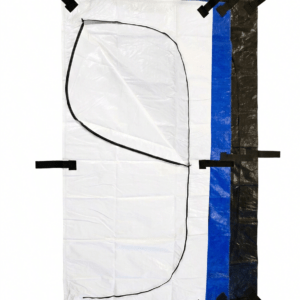
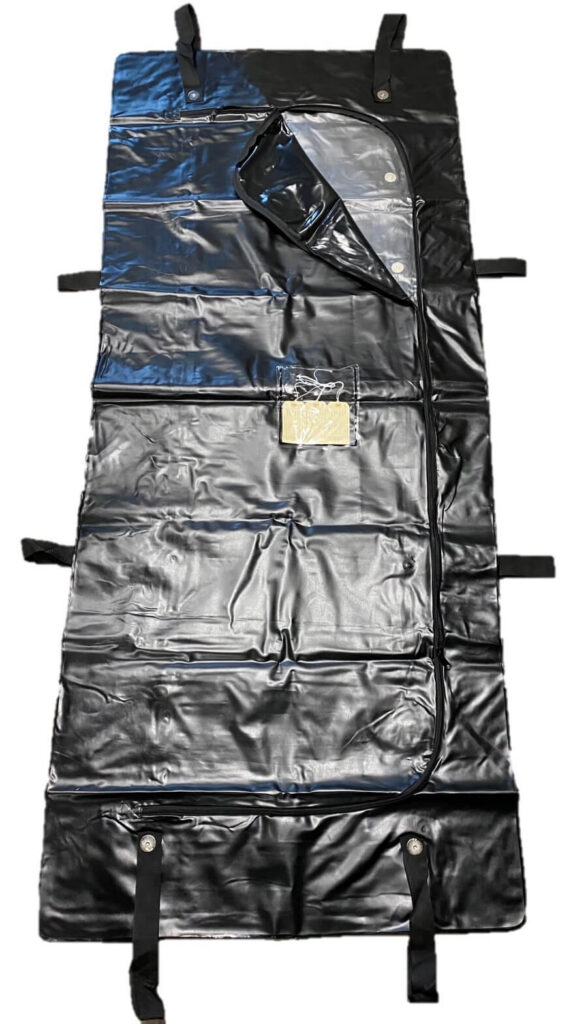
The Classic Plastics Corp 8-Handle Heavy Duty XL body bag was engineered specifically for this reality. This piece covers what facilities need to understand about managing bariatric case surges — and why the right equipment is the first line of protection for both staff and the individuals in your care.
The Bariatric Case Challenge Most Facilities Underestimate
Many facilities plan for bariatric cases in theory. Fewer are consistently equipped to handle them in practice. The gap between policy and preparedness tends to surface during surges — seasonal illness events, mass casualty incidents, or demographic shifts in a facility’s service population.
What a Sudden Bariatric Spike Looks Like Operationally
- Standard body bags on hand are undersized for the case load
- Staff attempt to improvise with multiple bags or reinforced wrapping — creating safety and dignity failures
- Transfer delays back up morgue throughput and create downstream scheduling pressure
- Staff injuries from improper lifting due to inadequate handle distribution
- Procurement scrambles that expose gaps in your emergency supply plan
None of these outcomes are acceptable. And every one of them is preventable with the right product in stock before demand spikes.
Why the 8-Handle Design Changes the Equation
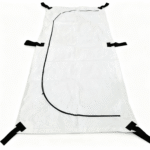
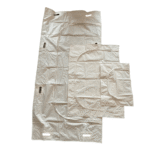
Most standard body bags ship with 4 handles – two on each side. For average-weight cases, that is sufficient. For bariatric cases, it is not. The 8-handle configuration on the Classic Plastics Corp Heavy Duty XL is not a feature add-on. It is an engineering response to a documented clinical and operational need.
Handle Distribution and Staff Safety
Eight handles positioned across the length and width of the bag allow more team members to participate in a lift simultaneously — reducing the per-person load and distributing weight along the full body length rather than concentrating force at two or four points. This directly reduces the risk of staff musculoskeletal injury, which OSHA identifies as one of the leading causes of lost work time in healthcare and mortuary settings.
- Handles per side: 4 (versus 2 on standard models)
- Optimal team lift: 6 to 8 personnel for cases exceeding 400 lbs
- Handle material: Reinforced nylon webbing rated for heavy-duty transfer loads
- Handle placement: Staggered for balanced weight distribution across the full body length
Heavy-Gauge Construction for Structural Integrity
Weight capacity starts with material. The Heavy Duty XL uses a heavier gauge polyethylene than standard models, with reinforced seams at every stress point. Zipper failure and seam separation — the two most common failure modes in undersized or standard bags used for bariatric cases — are addressed through the material specification and construction process.
- Material: Heavy-gauge virgin polyethylene — not recycled material
- Seam construction: Reinforced and heat-sealed at all stress points
- Zipper system: Heavy-duty double-zipper with leak-resistant seal
- Weight capacity: Engineered for bariatric cases — consult product spec sheet for rated capacity
XL Dimensions Designed for Dignified Containment
Sizing matters as much as strength. A bag that cannot fully contain a bariatric decedent creates professional, hygienic, and dignity-related failures that no facility can afford. The XL dimensions are calibrated to accommodate bariatric cases with sufficient margin for proper closure, positioning, and identification panel placement.
Stocking Strategy: How Much XL Inventory Is Enough?
There is no universal answer — but there is a structured way to find your facility’s right number. Bariatric case stocking decisions should be based on three factors: your historical bariatric case rate, your service population demographics, and your worst-case surge scenario.
Calculating Your Baseline Stock Level
- Step 1: Pull your bariatric case data from the past 24 months and identify your monthly average and your peak month
- Step 2: Multiply your peak month figure by 1.5 to establish a surge buffer
- Step 3: Add a minimum 30-day lead time buffer to account for supplier fulfillment timelines
- Step 4: Review your mutual aid agreements — your inventory may be called on to support neighboring facilities
- Step 5: Set a reorder trigger point — not a zero-stock trigger, but a threshold that initiates replenishment before you are exposed
Where to Store XL Inventory
- Dedicated bariatric supply section in your primary morgue or storage area
- Secondary cache in your loading or transfer bay for immediate access
- Mobile response vehicles if your facility supports field operations
- Clearly labeled, separate from standard inventory to avoid confusion during high-pressure situations
Staff Training Considerations for Bariatric Transfers
Equipment alone does not prevent injury. Staff need to know how to use the 8-handle system correctly — and that training needs to happen before a bariatric case arrives, not during one.
- Team lift protocol: Establish a minimum team size for cases above your facility’s defined weight threshold — most guidelines recommend no fewer than 4 to 6 personnel for bariatric transfers
- Handle assignment: Pre-assign handle positions before each lift so weight distribution is coordinated, not improvised
- Communication standard: Designate one team lead to call the lift — synchronized movement reduces injury risk
- Equipment check: Confirm zipper integrity and handle attachment before any transfer begins
- Dignity protocol: Brief all personnel on professional conduct standards before and during the transfer
Document your bariatric transfer protocol and include it in your facility’s standard operating procedures. OSHA and accreditation bodies look for evidence of formal safe patient and decedent handling programs.
Frequently Asked Questions
Q1: What weight capacity does the Classic Plastics Corp 8-Handle Heavy Duty XL body bag support?
The Heavy Duty XL is engineered for bariatric cases, with reinforced seams, heavy-gauge polyethylene construction, and an 8-handle system designed to distribute load across a larger transfer team. For specific rated weight capacity, refer to the current product specification sheet or contact our sales team directly. Capacity ratings are confirmed through product testing and should be matched to your facility’s case profile.
Q2: How many staff members are needed to safely transfer a bariatric decedent using the 8-handle bag?
For cases in the 300 to 400 lb range, a team of 4 to 6 personnel is generally appropriate when using an 8-handle bag with proper handle assignment. Cases exceeding 400 lbs should involve a minimum of 6 to 8 personnel. Your facility’s bariatric transfer protocol should define team size thresholds based on weight categories and your specific transfer environment. Always defer to your facility’s OSHA-compliant safe handling guidelines.
Q3: Can the Heavy Duty XL body bag be used for standard cases when bariatric inventory runs low?
Technically yes — the XL bag can be used for standard cases in a supply emergency. However, it is not recommended as standard practice. Oversized bags for standard cases can complicate positioning, identification, and transfer logistics. The correct approach is to maintain adequate separate inventory of both standard and XL sizes rather than relying on one SKU to cover both use cases.
Q4: How should the 8-Handle Heavy Duty XL body bag be stored to maintain its integrity?
Store in a cool, dry environment away from direct sunlight, chemical exposure, and heat sources. Avoid stacking heavy items on top of folded bags, as compression over time can stress seams and zipper mechanisms. Maintain a dedicated, clearly labeled bariatric inventory section separate from standard product to avoid confusion during time-sensitive situations.
Q5: Does Classic Plastics Corp offer bulk or institutional pricing for the Heavy Duty XL?
Yes. Classic Plastics Corp works directly with hospitals, medical examiner offices, funeral homes, and emergency management agencies on institutional pricing, volume orders, and standing supply agreements. Contact our team to discuss your facility’s volume requirements and establish a supply relationship that supports your operational needs year-round.
Summary
Bariatric case volume is not a trend that reverses. For hospitals, medical examiners, and funeral homes, the question is not whether bariatric cases will occur — it is whether your facility is equipped to handle them with the safety, speed, and dignity the situation demands.
- Bariatric case surges expose equipment gaps that standard inventory cannot bridge
- The 8-handle design reduces staff injury risk by distributing load across more team members
- Heavy-gauge construction and reinforced seams prevent the zipper and seam failures common in undersized or standard bags
- XL dimensions ensure dignified, compliant containment for the full range of bariatric cases
- Stocking strategy should be based on historical case data, surge scenarios, and reorder triggers — not zero-stock reactions
- Staff training on handle assignment, team lift protocol, and communication standards is as important as the equipment itself
The Classic Plastics Corp 8-Handle Heavy Duty XL body bag is not a specialty item for edge cases. For facilities with even modest bariatric case volume, it belongs in your standard inventory.
Equip Your Facility Before the Next Case Arrives
Classic Plastics Corp manufactures the 8-Handle Heavy Duty XL body bag domestically, to institutional-grade specifications. We supply hospitals, medical examiners, funeral homes, and emergency management agencies nationwide — with the volume capacity and lead times your facility depends on.