
Spring storm season does not wait. Tornadoes, flooding, severe weather events, and mass casualty incidents can materialize with little warning — and when they do, the professionals who respond depend on supplies that are ready, verified, and in-compliance. Whether you manage a hospital, a county emergency operations center, a mortuary, or a first-response unit, your disaster pouch inventory is a critical line of defense.
An annual audit before spring storm season is not just best practice — it is a professional obligation. This guide walks emergency managers, safety officers, procurement teams, and facilities directors through a structured, step-by-step process to audit their disaster pouch inventory, identify gaps, and ensure compliance before the season peaks.
Why Annual Disaster Pouch Audits Matter Before Spring Storm Season
Spring is statistically the most active period for severe weather in the United States. FEMA, NIMS, and hospital accreditation bodies all recommend that emergency supply inventories be reviewed at minimum once annually — and ideally before known risk seasons.
The Cost of an Unaudited Inventory
- Expired or degraded supplies that fail at the point of need
- Compliance violations that expose your organization to liability
- Understocked pouches that create operational delays during mass casualty events
- Procurement gaps that cannot be closed quickly during a surge
Who Should Conduct the Audit
- Emergency Management Directors
- Hospital Supply Chain and Biomedical Teams
- County Coroner and Medical Examiner Offices
- Funeral Home Directors and Mortuary Managers
- Disaster Response Coordinators and First Responders
Step-by-Step: How to Audit Your Disaster Pouch Inventory
Step 1 — Locate and Centralize All Inventory
Begin by pulling all disaster pouches and related supplies from every storage location: emergency supply closets, mobile response vehicles, off-site storage units, and department-level caches. Many organizations discover supply fragmentation during this step — items distributed across locations with no centralized tracking.
- Create a master location list before pulling inventory
- Document every storage site, including secondary and mobile locations
- Photograph storage conditions to flag temperature or moisture concerns
Step 2 — Inspect Every Pouch for Physical Integrity
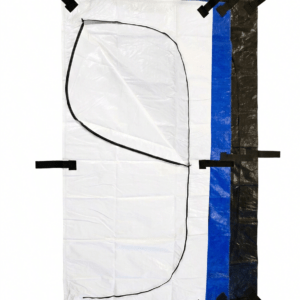
Physical degradation is the most common and most overlooked supply failure. Body bags and disaster pouches are designed for demanding environments, but storage conditions, age, and handling affect their integrity.
- Check for: tears, pinholes, zipper failures, or seal compromises
- Inspect closures: double-zipper systems and leak-resistant seals should operate smoothly without force
- Assess material condition: look for brittleness, discoloration, or odor that signals material breakdown
- Review labeling: confirm all identification panels, tracking tabs, and biohazard markings are legible
Step 3 — Cross-Reference Against Your Current Specification Standards
Regulatory standards and organizational requirements evolve. Confirm that your existing inventory meets current OSHA, CDC, and NFPA guidelines for biohazard containment, as well as any state-level regulations applicable to your jurisdiction.
- Verify material grade matches your current procurement spec (minimum 4-mil polyethylene or equivalent)
- Confirm weight capacity ratings for your use profile
- Check that products comply with any updated infection control or biohazard containment standards
- Ensure military or government-contracted inventory meets current MIL-SPEC requirements if applicable
Step 4 — Count and Categorize Your Inventory
Run a complete count organized by product type, size, and condition. Use a tiered classification system to separate ready-to-deploy inventory from items requiring review or immediate retirement.
- Tier 1 — Deploy-Ready: full integrity, in-spec, within service life
- Tier 2 — Conditional: minor concerns that require secondary review before deployment
- Tier 3 — Retire Immediately: compromised integrity, out-of-spec, or past recommended service life
Step 5 — Calculate Replenishment Needs Against Your Response Plan
Your inventory audit is only actionable if it is measured against your organization’s actual response obligations. Pull your current emergency response plan and calculate minimum stock levels based on your jurisdiction’s mass casualty planning scenarios.
- Review your HICS or ICS response plan for minimum supply thresholds
- Factor in mutual aid agreements that may draw on your inventory
- Account for lead times from your supplier — spring surge can create delays
- Order replenishment stock early: procurement decisions made before peak season avoid back-order risk
Step 6 — Document Everything
A completed audit without documentation is a missed opportunity. Proper records protect your organization during inspections, accreditation reviews, and post-incident analysis.
- Record audit date, auditor name, and facility location
- Log Tier classification results for every product category
- Note any compliance concerns and the corrective actions taken
- File documentation with your emergency preparedness records in accordance with your retention policy
What to Look for in a Reliable Body Bag and Disaster Pouch Supplier
Your audit is only as strong as your ability to rapidly restock. When replenishment gaps are identified, your supplier relationship becomes critical. Here is what separates a reliable emergency preparedness supplier from one that will leave you short during a surge.
- Domestic manufacturing: reduces supply chain exposure and ensures faster fulfillment
- Made-to-spec capabilities: ability to produce to MIL-SPEC, hospital-grade, or custom organizational requirements
- Surge capacity: confirmed ability to scale production during regional or national emergency events
- Material transparency: full disclosure of materials, thickness, and testing certifications
- Institutional experience: established track record with government agencies, hospitals, and first-responder organizations
Classic Plastics Corp has supplied body bags and disaster pouches to emergency management agencies, hospitals, medical examiners, and mortuary professionals for decades. Our domestic manufacturing and institutional-grade quality control ensure your organization is never left unprepared.
Common Audit Mistakes to Avoid
- Auditing in silos: failing to check all storage locations creates false confidence in your readiness level
- Skipping physical inspection: a count without a condition assessment misses the most common failure point
- Ignoring spec drift: using outdated product specs exposes your organization to compliance risk
- Waiting until after the season starts: procurement delays during active storm season are common; order early
- Failing to document: an undocumented audit cannot protect your organization during accreditation or incident review
Frequently Asked Questions
Q1: How often should a disaster pouch inventory audit be conducted?
At minimum, organizations should conduct a full inventory audit annually. For high-volume facilities or those in high-risk geographic areas, a biannual audit — typically before spring storm season and before hurricane season — is strongly recommended. FEMA and NIMS guidelines support pre-season audits as part of standard emergency preparedness planning.
Q2: What is the recommended shelf life for body bags and disaster pouches?
Most quality body bags manufactured from virgin polyethylene have a recommended service life of 3 to 5 years under proper storage conditions. However, environmental factors — including heat, UV exposure, and humidity — can significantly accelerate material degradation. Physical inspection at each annual audit should override any assumed shelf life.
Q3: What storage conditions are required to preserve body bag integrity?
Disaster pouches should be stored in a cool, dry environment away from direct sunlight and chemical exposure. Ideal storage temperature is between 50°F and 75°F. High heat or UV exposure can cause polyethylene to become brittle, compromising zipper seals and material strength. Storage in vehicles without climate control is a common cause of premature degradation.
Q4: What compliance standards apply to body bags used in emergency response?
Requirements vary by application and jurisdiction. Hospital and medical examiner use is typically governed by OSHA biohazard containment standards and CDC infection control guidelines. Government and military applications may require compliance with MIL-SPEC B-131 or equivalent. Organizations should verify current requirements with their legal, compliance, or accreditation team.
Q5: How much lead time should we allow when ordering replenishment stock before spring storm season?
We recommend initiating procurement at least 60 to 90 days before your region’s peak storm season. High-demand periods create supply pressure across the industry, and domestic manufacturers — including Classic Plastics Corp — can experience increased lead times during regional or national emergency activations. Ordering early ensures you receive product on schedule without disruption.
Summary
A thorough annual disaster pouch inventory audit is one of the most important preparedness steps any emergency management professional, hospital system, mortuary, or first-response agency can take before spring storm season. The six-step process outlined in this guide — from centralizing your inventory and inspecting physical integrity, to cross-referencing compliance standards and calculating replenishment needs — gives your organization the visibility to respond with confidence when it matters most.
- Locate and centralize all inventory across every storage site
- Physically inspect every pouch for seal integrity, material condition, and labeling
- Verify your inventory meets current regulatory and specification standards
- Count, classify, and tier your inventory by deployment readiness
- Calculate replenishment needs against your active emergency response plan
- Document all findings for compliance, accreditation, and institutional records
Spring storm season will not wait. Your inventory audit should not either.
Ready to Replenish or Upgrade Your Disaster Pouch Inventory?
Classic Plastics Corp is a domestic manufacturer of body bags and disaster pouches trusted by hospitals, medical examiners, emergency management agencies, and mortuary professionals nationwide. We manufacture to institutional-grade standards with the surge capacity your organization depends on.