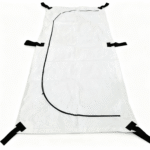
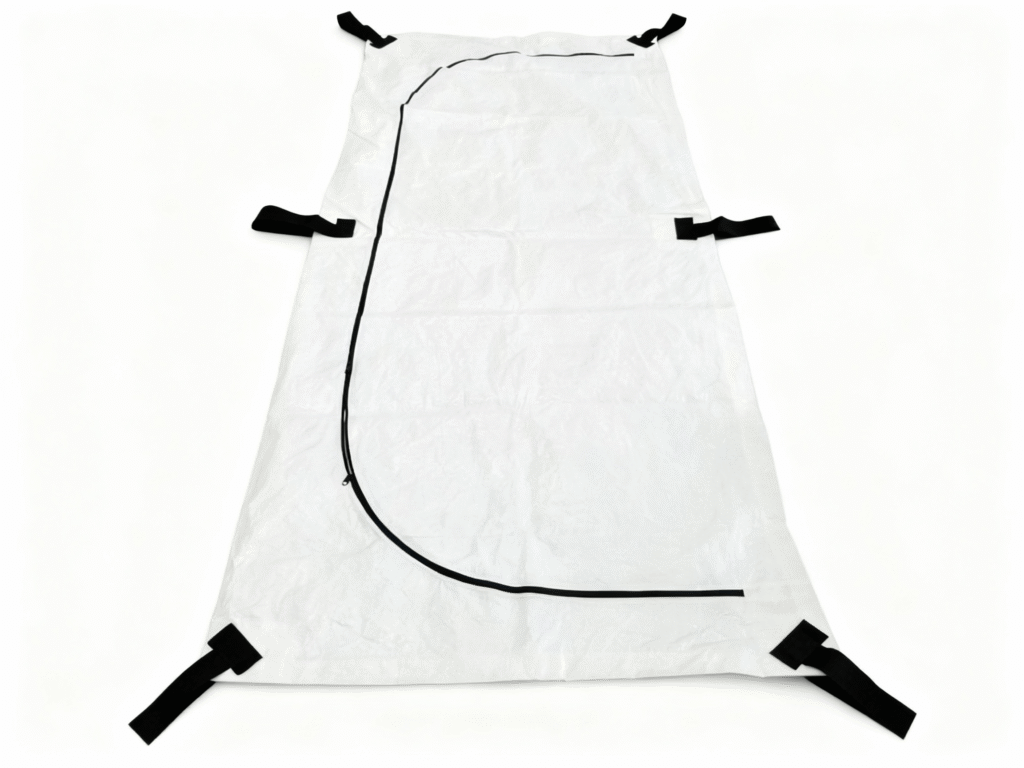
Leak resistant mortuary transit bags are one of the most consequential supply decisions a funeral home, mortuary, or cremation facility makes and one of the most frequently underspecified. When a transit bag fails under transport conditions, the result is not a minor inconvenience. It is a staff exposure event, a surface decontamination incident, and a potential OSHA Bloodborne Pathogens compliance breach.
What most prep room managers know from experience and what procurement decisions do not always reflect is that leak resistant mortuary transit bags deliver their full contamination control value only when paired with correctly sized and fitted mortuary garments. Used together as a coordinated system, these two products transform the highest-risk workflow in the prep room into a controlled, repeatable process. Used independently, each one leaves a gap the other cannot close.
This guide covers what true leak resistance requires in construction, how mortuary garment pairing closes the contamination exposure gap, and what funeral homes, mortuaries, and cremation facilities should require from their supplier before the next order ships.
Why Leak Resistant Mortuary Transit Bags Matter More Than Most Facilities Realize
The prep room carries the highest contamination risk of any space in a funeral home or mortuary operation. Four exposure points define that risk and leak resistant mortuary transit bags are the primary engineering control at three of them.
The Four Prep Room Contamination Exposure Points
- Dressing and positioning: direct hand and forearm contact during mortuary garment application – the closest physical contact point in the prep room workflow
- Transfer to the transit bag: moving a dressed decedent into a leak resistant mortuary transit bag is the single highest-risk fluid exposure moment. Any seal failure or bag integrity compromise at this point becomes an immediate surface contamination event
- Sealed bag transport: a transit bag that does not hold a true leak resistant seal across loading docks, vehicle floors, and facility corridors carries contamination beyond the prep room into environments that are significantly harder to decontaminate
- Garment-bag interface: when mortuary garment sizing and transit bag internal dimensions are mismatched, staff must reposition or compress remains to achieve closure. The most avoidable high-risk contact point in the entire workflow
What OSHA Requires — and What It Means for Your Transit Bag Specification
OSHA’s Bloodborne Pathogens Standard (29 CFR 1910.1030) requires that contaminated items be placed in closable containers constructed to prevent leakage during handling, storage, and transport. The standard’s plain language requirement leak-proof or leak-resistant containment at every transfer point is the compliance baseline. Single-zipper bags with stitched seams routinely fail that standard under real transport conditions. Facilities still using them are carrying an exposure and compliance liability on every case.
- Engineering controls must address every identified exposure point in the prep room workflow
- Work practice controls must minimize splashing, spraying, and direct contact with blood and OPIM
- PPE is required for all staff involved in preparation and transfer but PPE does not substitute for adequate containment
- Exposure incident documentation accumulates repeated containment failures create a compliance record that cannot be easily explained during an OSHA inspection
What True Leak Resistance Requires: Construction Standards That Matter
Not every product sold as a leak resistant mortuary transit bag is built to the same standard. The term appears on a wide range of products from genuinely engineered containment solutions to cost-reduced bags where ‘leak resistant’ is a marketing description rather than a construction specification. Knowing the difference is not complicated. Here are the four construction elements that determine whether a mortuary transit bag holds under real-world conditions.
1. Seam Construction — The Most Common Failure Point
Heat-sealed seams with no stitching penetrations are the baseline for any legitimate leak resistant mortuary transit bag. Stitched seams regardless of thread type or stitch density create micro-perforations along every seam line. Under the hydrostatic pressure of a loaded bag in transit, fluid finds those perforations. The failure is not dramatic. It is a slow seep that reaches the exterior surface before anyone notices it.
- Specify: 100% heat-sealed seam construction no stitching at any seam line
- Reject: any bag where stitching is visible at side seams, base seams, or handle attachment points
2. Zipper System — Single vs. Double
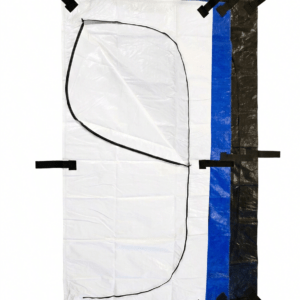
A double-zipper system with an integrated fluid channel between the two closures is the construction standard that distinguishes a true leak resistant mortuary transit bag from a standard closure product. The fluid channel the gap between zipper one and zipper two creates a capture zone that catches any fluid that passes the first zipper before it can reach the exterior. Single-zipper bags, even heavy-duty ones, do not provide this redundancy.
- Specify: double-zipper closure with integrated fluid channel between closures
- Reject: single-zipper bags marketed as leak resistant without double-closure documentation
3. Film Gauge — Material Thickness Under Load
Film gauge determines puncture resistance and fluid containment under the weight and handling pressure of actual use. Minimum 3-mil polyethylene is the practical floor for standard cases in a leak resistant mortuary transit bag. Bariatric cases and high-contact transport environments loading docks, vehicle floors with hardware exposure warrant heavier gauge specification.
- Standard cases: minimum 3-mil polyethylene film
- Bariatric cases: 4-mil or heavier confirm with supplier based on case weight profile
4. Base Panel Construction — Where Hydrostatic Pressure Is Highest
The base of a leak resistant mortuary transit bag carries the greatest fluid load during transport. Standard base panels single-layer film sealed at the perimeter — are the most common failure point in bags that perform adequately on the prep table but fail in the vehicle. Reinforced base construction, including gusseted or double-layered base panels, distributes hydrostatic load and prevents the seam stress that causes base failures under transport conditions.
- Specify: reinforced or gusseted base panel construction
- Test: fill sample bags with water to rated load before approving a supplier transition
How Mortuary Garments Complete the Leak Resistant Transit Bag System
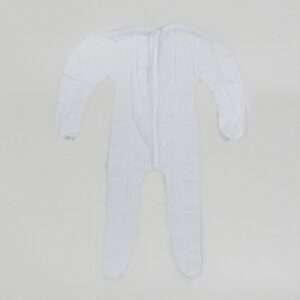
A leak resistant mortuary transit bag controls what exits the containment system. Mortuary garments control the contamination load that enters it. That distinction matters operationally because the garment selection directly affects how much fluid the transit bag seal must manage, and how much staff contact occurs at the transfer point.
Garment Fit as a Contamination Control Variable
- Correct sizing reduces handling time: a garment that fits without adjustment means less time in direct contact at the transfer point every unnecessary handling minute is an unnecessary exposure minute
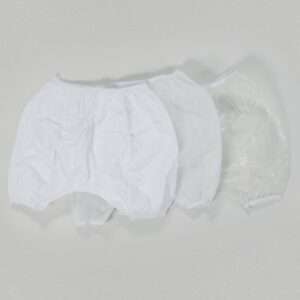
- Full-coverage garments reduce exposed fluid surfaces: garments covering the torso, arms, and lower extremities minimize the fluid-exposed surface area that staff contact during transit bag loading
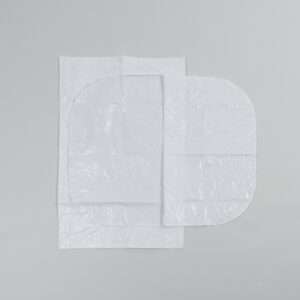
- Absorbent garment materials: garments with absorbent inner layers reduce surface fluid pooling directly decreasing the containment load that the leak resistant mortuary transit bag seal must manage
The Sizing Compatibility Problem Most Facilities Don’t Track
When mortuary garments and leak resistant mortuary transit bags are sourced separately different suppliers, different specification cycles, different purchase decisions sizing mismatches are the predictable result. Staff compensate. They compress, reposition, and force closures. Each workaround is an additional contact event. None of them appear in your incident log until something goes wrong.
- Oversized garments bunch during bag loading, stressing zipper seals at the closure point
- Undersized garments leave exposed surface areas that increase fluid contact during transfer
- Dimensional mismatches between dressed remains and bag interior force staff repositioning the highest-risk manual contact point in the workflow
- Coordinated sizing from a single supplier eliminates this variable and the improvisation it produces
Building a Standardized Prep Room System Around Leak Resistant Mortuary Transit Bags
Individual product quality is necessary. It is not sufficient. The contamination control value of pairing leak resistant mortuary transit bags with correctly fitted mortuary garments is not simply additive it is multiplicative when both products are selected, sized, and used as a deliberate system.
What System Standardization Delivers
- Eliminated sizing gaps: when garment and bag dimensions are specified together, the transfer becomes a controlled, predictable motion not a problem the staff member on that shift has to solve independently
- Reduced transfer contact time: a well-fitted garment inside a correctly sized leak resistant mortuary transit bag loads cleanly reducing the duration of the highest-risk contact point in the workflow
- Containment redundancy: an absorbent garment layer inside a double-zipper leak resistant bag creates two fluid containment barriers between the decedent and any external surface staff, vehicle, or facility floor
- Consistent outcomes across all staff: when the product pairing is standardized, every team member executes the same transfer protocol with the same contamination control outcome — regardless of experience level
Staff Training Is Simpler With a Standardized System
- One transfer protocol not several adapted to product variability
- New staff learn a single system rather than managing inconsistency between product types
- Deviation from the standard becomes visible and correctable not normalized as a workaround
- Incident documentation is cleaner exposure events trace to protocol deviation, not product unpredictability
What to Require From Your Supplier Before the Next Order
The sourcing conversation for leak resistant mortuary transit bags should go deeper than price per unit and delivery lead time. Here is the evaluation framework that protects your facility’s staff, your OSHA compliance record, and your operational continuity.
- Written construction specification: require documented confirmation of seam type, zipper system design, film gauge, and base panel construction not a label claim
- Sizing compatibility matrix: request explicit confirmation that mortuary garment sizing coordinates with transit bag internal dimensions across your full case range, including bariatric
- OSHA compliance documentation: ask whether the supplier provides documentation suitable for your facility’s OSHA Bloodborne Pathogens exposure control plan reputable suppliers in this category provide this as standard
- Sample and test protocol: require samples of both products before volume commitment fill-test bags under simulated transport conditions and verify garment fit across your case size range
- Domestic manufacturing and lead time confirmation: leak resistant mortuary transit bags are not a category where back-order exposure is operationally acceptable — confirm domestic production capacity and standing inventory before finalizing
Frequently Asked Questions About Leak Resistant Mortuary Transit Bags
Q1: What makes a mortuary transit bag truly leak resistant — and how do I verify it before purchasing?
A genuinely leak resistant mortuary transit bag requires four construction elements working together: heat-sealed seams with no stitching penetrations, a double-zipper closure with an integrated fluid channel between the two closures, a minimum 3-mil polyethylene film gauge for standard cases, and reinforced base panel construction. To verify before purchasing, request written construction specifications from the supplier not just a product label — and conduct a water-fill test on samples under simulated transport load before approving a supplier transition.
Q2: Does OSHA specifically require leak resistant mortuary transit bags in funeral home prep rooms?
OSHA’s Bloodborne Pathogens Standard (29 CFR 1910.1030) requires that contaminated items be placed in closable containers constructed to contain all contents and prevent leakage during handling, storage, transport, or shipping. While the standard does not specify ‘mortuary transit bag’ by name, the containment requirement it establishes applies directly to the transfer and transport of decedents. Single-zipper bags with stitched seams frequently do not meet the standard’s leakage prevention requirement under real transport conditions. Facilities should review their current transit bag specification against the standard’s containment language and consult OSHA compliance counsel for jurisdiction-specific guidance.
Q3: How does pairing mortuary garments with leak resistant transit bags reduce staff exposure risk?
Mortuary garments reduce the fluid-exposed surface area and fluid pooling that staff contact during the transfer process. Leak resistant mortuary transit bags contain what the garment cannot fully absorb. Together, they create a two-layer containment system absorbent garment layer inside a double-zipper sealed bag — that is significantly more effective at preventing staff exposure than either product used independently. Correct sizing coordination between garment and bag is the key variable: mismatched dimensions force staff repositioning at the transfer point, which is where most exposure events occur.
Q4: What film gauge should leak resistant mortuary transit bags be for bariatric cases?
Standard cases warrant a minimum 3-mil polyethylene film gauge in a leak resistant mortuary transit bag. Bariatric cases particularly those above 300 lbs — place significantly greater hydrostatic and mechanical stress on bag film, seams, and base panels. A 4-mil or heavier gauge specification is appropriate for bariatric applications, along with confirmation that the bag’s handle system, zipper construction, and base panel reinforcement are rated for the higher weight load. Consult your supplier for product specifications matched to your facility’s bariatric case weight profile.
Q5: Can we source leak resistant mortuary transit bags and mortuary garments from the same supplier?
Yes, and for most facilities, sourcing both from a single supplier is the operationally stronger choice. A single supplier can confirm sizing compatibility between garment dimensions and transit bag interior dimensions across your full case range, provide coordinated OSHA compliance documentation for both products, and ensure consistent quality standards across the system. Classic Plastics Corp manufactures both leak resistant mortuary transit bags and mortuary garments domestically, with coordinated sizing specifications and institutional-grade construction standards. Contact our team to request a product specification package and sample kit.
Summary: What Leak Resistant Mortuary Transit Bags Actually Protect
Leak resistant mortuary transit bags are the primary engineering control at the highest-risk contamination exposure points in any prep room operation. Their construction seam type, zipper system, film gauge, base panel determines whether they hold under real transport conditions or fail quietly in ways that accumulate as staff exposure events and OSHA compliance liabilities.
- True leak resistance requires heat-sealed seams, double-zipper closure with fluid channel, minimum 3-mil film gauge, and reinforced base panel construction not a label claim
- Mortuary garment pairing closes the contamination gap that transit bags alone cannot reducing fluid load, surface exposure, and transfer contact time simultaneously
- Sizing coordination between garment and bag eliminates the staff improvisation at the transfer point where most prep room exposure events originate
- System standardization produces consistent contamination control outcomes across all staff, all shifts, and all case types
- Supplier evaluation must include written construction specifications, sizing compatibility documentation, OSHA compliance support, and domestic manufacturing confirmation
Leak resistant mortuary transit bags protect your staff. Pairing them correctly with mortuary garments protects the system. Sourcing both from a supplier who understands the difference protects your facility.
Source Leak Resistant Mortuary Transit Bags Built for the Demands of Your Prep Room
Classic Plastics Corp manufactures leak resistant mortuary transit bags and coordinated mortuary garments domestically, to institutional-grade construction specifications. We provide written product documentation suitable for OSHA Bloodborne Pathogens compliance records, and our sizing specifications are coordinated across both product lines. Funeral homes, mortuaries, and cremation facilities nationwide depend on our products to protect their staff every shift.