A retort is not cheap to replace. Refractory brick lining — the heat-resistant interior that makes cremation chambers function at operating temperatures between 1,400°F and 1,800°F — runs into the tens of thousands of dollars when full replacement is required. Premature erosion of that lining does not announce itself with a warning. It accumulates quietly, cycle by cycle, driven by the combustion chemistry of whatever goes into the chamber.
For human cremation facility managers, that chemistry starts with the bags and pouches used during the cremation process. Chlorine-containing materials — standard PVC being the most common — release hydrogen chloride gas during combustion. That gas is corrosive. It attacks refractory brick, accelerates lining degradation, and over time forces costly maintenance cycles and unplanned equipment downtime that no facility budget absorbs easily.
Chlorine-free PE-SCRIM and PEVA bags are not a sustainability choice in this context. They are an equipment protection decision with direct operational and financial consequences. This piece explains the mechanism, the compliance picture, and what facility managers need to evaluate when sourcing cremation bags that protect the equipment they depend on.
The Chemistry Behind Retort Lining Erosion — What Facility Managers Need to Understand
You do not need a chemistry degree to manage this risk. But you do need to understand the basic mechanism, because it is the foundation of every sourcing decision your facility makes about cremation bag materials.
What Happens When Chlorine-Containing Materials Combust
PVC — polyvinyl chloride — is approximately 57 percent chlorine by molecular weight. When it burns, that chlorine does not simply disappear. It reacts with hydrogen in the combustion environment to form hydrogen chloride (HCl) gas. At cremation temperatures, HCl is an aggressive acid gas. It does not pass harmlessly through the retort chamber. It contacts the refractory lining surfaces — brick, mortar joints, and seals — and begins a chemical erosion process.
- Refractory attack: HCl reacts with the calcium silicate and alumina compounds in refractory brick, gradually breaking down the crystalline structure that gives the lining its heat resistance
- Mortar joint degradation: the mortar joints between refractory bricks are particularly vulnerable — HCl penetration here accelerates spalling and joint failure before the brick faces show visible damage
- Metal component corrosion: HCl also attacks metal components within the chamber — hearth plates, door frames, and burner assemblies — compounding maintenance costs beyond refractory replacement alone
- Cumulative damage: no single cremation cycle causes catastrophic failure. The damage is incremental — but it compounds with every cycle that introduces chlorine into the combustion environment
Why Standard PVC Bags Are Still in Circulation Despite This Risk
Cost is the short answer. PVC is inexpensive to produce, and the connection between bag material choice and retort lining condition is not always visible in the maintenance records of a facility that has not specifically tracked it. Damage accumulates over years, and by the time it becomes a capital expenditure problem, the original sourcing decision is long forgotten. Facility managers who understand the mechanism make the switch proactively. Those who learn about it reactively tend to do so after an expensive repair.
PE-SCRIM vs. PEVA: Understanding What Each Material Brings to the Chamber
Chlorine-free is the baseline requirement. But within the chlorine-free category, PE-SCRIM and PEVA are distinct materials with different performance profiles. Facility managers should understand both.
PE-SCRIM: Structural Reinforcement Without Chlorine
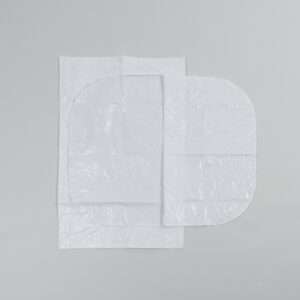
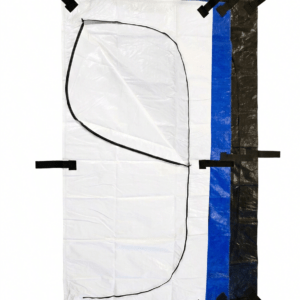
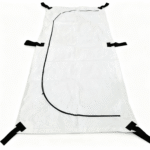
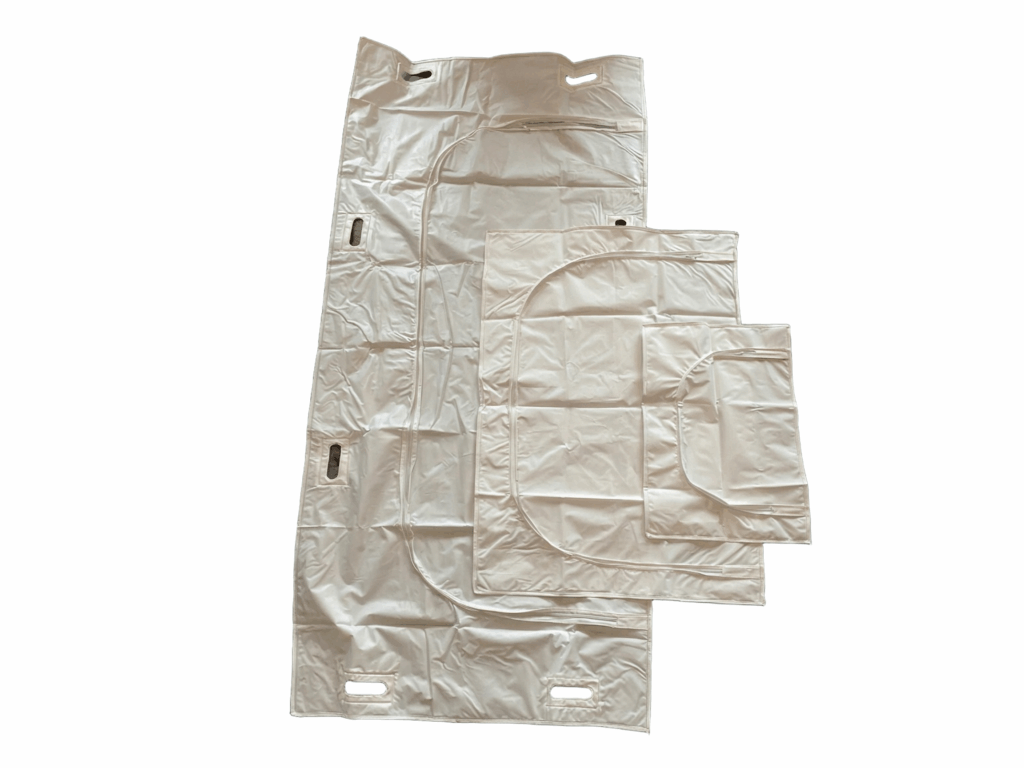
PE-SCRIM is a polyethylene film laminated with a scrim — a woven or cross-laid reinforcement mesh — that gives the bag significantly greater tear resistance and structural integrity than standard polyethylene film alone. The scrim layer is critical for handling during transfer and positioning, particularly for cases involving movement across surfaces or transfers from cots and gurneys.
- Material base: virgin polyethylene — no chlorine, no halogenated compounds
- Combustion byproducts: carbon dioxide and water vapor under complete combustion conditions — no HCl formation
- Structural advantage: the scrim reinforcement prevents the tearing and handling failures common in standard PE film under transfer stress
- Ash residue: burns cleanly without leaving contaminating residue that affects cremated remains quality
- Best application: cases requiring robust handling prior to cremation — standard and bariatric cases, multi-transfer workflows
PEVA: The Flexible Chlorine-Free Alternative
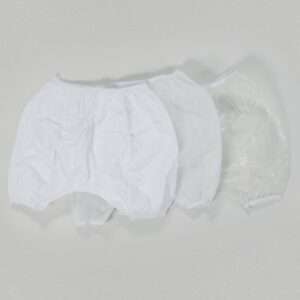
PEVA — polyethylene vinyl acetate — is a copolymer of ethylene and vinyl acetate that achieves the flexibility and drape of PVC without the chlorine chemistry. It is widely used as a PVC replacement across multiple industries, including medical and food-grade applications, precisely because it meets performance requirements without the environmental and combustion liabilities.
- Material base: ethylene-vinyl acetate copolymer — chlorine-free by molecular structure
- Combustion byproducts: carbon dioxide and water vapor — no acid gas formation
- Flexibility advantage: PEVA achieves the conforming drape of PVC, making it well-suited for applications where bag conformation to the body is important
- Temperature behavior: PEVA has a lower melting point than PE-SCRIM, which means it enters combustion earlier in the cremation cycle — a characteristic that can be advantageous for chamber efficiency
- Best application: facilities prioritizing PVC-equivalent handling characteristics without chlorine exposure risk
Choosing Between PE-SCRIM and PEVA for Your Facility
- PE-SCRIM is the stronger choice where structural integrity during transfer is the primary concern
- PEVA is the stronger choice where PVC-equivalent flexibility and drape are operationally important
- Many facilities stock both, using PE-SCRIM as the primary cremation bag and PEVA for specific case types or workflow stages
- Consult your retort manufacturer for any material-specific recommendations tied to your chamber model and operating temperature range
The Compliance Picture: Emissions Regulations and Chlorine in the Cremation Environment
Beyond equipment protection, chlorine in the cremation environment is an emissions compliance issue. Facility managers operating under EPA air quality permits — and increasingly under state-level crematory emissions regulations — need to understand where HCl fits in the regulatory framework.
EPA and State-Level HCl Emissions Standards
The EPA’s National Emission Standards for Hazardous Air Pollutants (NESHAP) and various state air quality agencies have established emission limits for acid gases, including hydrogen chloride, from combustion sources. Crematories are subject to these regulations under varying frameworks depending on facility size, operating hours, and state jurisdiction.
- HCl as a regulated hazardous air pollutant: hydrogen chloride is classified as a hazardous air pollutant (HAP) under the Clean Air Act — facilities generating HCl through PVC combustion are introducing a regulated compound into their emissions stream
- State permit conditions: many state air quality permits for crematories include specific conditions around materials introduced into the chamber — some jurisdictions explicitly restrict chlorinated materials
- Permit renewal exposure: facilities using PVC-containing cremation bags may face increased scrutiny during air quality permit renewals as emissions regulations tighten across the industry
- Documentation value: switching to certified chlorine-free materials creates a documentable materials management record that supports compliance demonstrations during inspections and permit reviews
The Broader Regulatory Trend
Crematory emissions regulations have tightened steadily at both the federal and state level over the past fifteen years, and the trajectory continues in the same direction. Facilities that have already transitioned to chlorine-free cremation materials are ahead of the compliance curve — rather than facing a reactive switch under regulatory pressure, often during a permit renewal cycle or following an inspection finding.
Operational Impact: What Switching to Chlorine-Free Materials Looks Like in Practice
The case for chlorine-free PE-SCRIM and PEVA bags is clear in theory. What does the operational transition actually involve for a human cremation facility manager?
What Changes — and What Stays the Same
- Handling and workflow: PE-SCRIM and PEVA bags are designed to match the handling characteristics of standard cremation bags — transfer, positioning, and loading procedures do not require retraining
- Storage requirements: storage conditions are equivalent to standard polyethylene products — cool, dry, away from UV exposure and chemical contact
- Combustion behavior: both PE-SCRIM and PEVA combust cleanly under standard cremation operating temperatures without producing visible smoke differentials or chamber behavior changes that require operational adjustment
- Documentation update: your facility’s materials management records and supplier documentation should be updated to reflect the chlorine-free specification — this creates the paper trail that supports compliance demonstrations
Communicating the Change to Families
Most families will never ask about bag material specifications. For those that do — particularly families with environmental concerns — the switch to chlorine-free materials is a straightforward and meaningful answer. It also aligns with the growing number of facilities that publish environmental stewardship statements as part of their service offering.
Calculating the Equipment Protection ROI
- Refractory relining cost: full retort refractory relining typically ranges from $15,000 to $40,000 or more depending on chamber size and contractor rates
- Extended lining lifespan: eliminating HCl exposure extends refractory lining service life — even a 20 to 30 percent extension on a $25,000 relining cycle represents $5,000 to $7,500 in deferred capital expenditure per chamber
- Reduced maintenance frequency: less corrosive chemistry in the chamber reduces the frequency of mortar joint repairs, hearth plate replacement, and door seal maintenance
- Downtime cost: every unplanned retort outage has a direct revenue impact — protecting the lining protects operating continuity
What to Require From Your Supplier When Sourcing Chlorine-Free Cremation Bags
Not every product marketed as chlorine-free or PVC-free is manufactured to the same standard. Facility managers should apply a consistent evaluation framework when vetting suppliers.
- Material certification: request written confirmation of chlorine-free material specification — specifically that neither the bag film nor any component material contains PVC, PVDC, or other halogenated polymers
- Combustion testing data: ask whether products have been tested for combustion byproduct profile — reputable manufacturers can provide data confirming the absence of HCl and dioxin formation under cremation temperature conditions
- Retort manufacturer compatibility: confirm the product has been reviewed or approved for use with your specific retort model — some manufacturers publish approved materials lists
- Domestic manufacturing: domestically manufactured products carry more traceable material supply chains — relevant when material certification is a compliance requirement
- Volume and lead time reliability: cremation facilities cannot afford supply gaps — confirm your supplier’s production capacity and standard lead times before committing to a transition
Frequently Asked Questions
Q1: How significant is the refractory lining damage caused by PVC cremation bags over time?
The damage is real but cumulative — no single cremation cycle with a PVC bag causes catastrophic failure. Over hundreds or thousands of cycles, HCl exposure degrades the calcium silicate and alumina compounds in refractory brick, accelerates mortar joint failure, and corrodes metal chamber components. Facilities that have switched to chlorine-free materials and subsequently had refractory inspections often find measurably better lining condition than facilities still using PVC products at comparable equipment ages. The financial case for switching is strongest when viewed over the full equipment lifecycle.
Q2: Are PE-SCRIM and PEVA bags compliant with EPA crematory emissions standards?
PE-SCRIM and PEVA bags, being chlorine-free, do not generate hydrogen chloride during combustion — removing a regulated hazardous air pollutant from your emissions stream. Whether a specific product meets the requirements of your facility’s air quality permit depends on your jurisdiction, permit conditions, and operating parameters. Facility managers should consult their environmental compliance counsel and review current permit conditions. Switching to certified chlorine-free materials is a documentable step that supports compliance demonstrations and is increasingly aligned with the direction of state-level crematory emissions regulation.
Q3: Do chlorine-free bags cost significantly more than standard PVC cremation bags?
The cost differential varies by supplier, volume, and material specification. In many cases the premium over standard PVC bags is modest — particularly when evaluated against the equipment protection and compliance value the switch delivers. The more relevant cost comparison is between the incremental cost of chlorine-free bags per cremation cycle versus the avoided cost of accelerated refractory maintenance, unplanned downtime, and potential compliance remediation. Facilities that have run this analysis consistently find the economics favor the switch.
Q4: Can we use PE-SCRIM and PEVA bags with any retort model, or are there equipment-specific considerations?
PE-SCRIM and PEVA bags are compatible with the vast majority of modern retort designs. That said, retort manufacturers vary in their specific material recommendations, and some publish approved materials lists for their chamber models. Classic Plastics Corp recommends confirming compatibility with your retort manufacturer before transitioning — particularly if your equipment operates at the upper end of standard temperature ranges or has specific hearth plate configurations that affect how bag materials interact with the combustion chamber floor.
Q5: How do we document the switch to chlorine-free cremation bags for compliance purposes?
Documentation should include: supplier material certification letters confirming chlorine-free composition; updated purchase records showing the transition date and product specification; and a notation in your facility’s materials management policy reflecting the chlorine-free standard. If your facility operates under an air quality permit with materials conditions, notify your permitting authority of the change and retain documentation in your compliance file. Classic Plastics Corp provides material certification documentation to all institutional customers as a standard part of the supplier relationship.
Summary
For human cremation facility managers, the bag material decision is not a secondary procurement detail. It is a direct input into retort lining longevity, emissions compliance, and operating continuity. The mechanism is straightforward: chlorine in PVC bags becomes hydrogen chloride gas during combustion, and HCl is corrosive to the refractory brick, mortar joints, and metal components that define your equipment’s service life.
- PVC cremation bags release hydrogen chloride during combustion — an acid gas that erodes refractory lining through cumulative chemical attack with every cycle
- PE-SCRIM bags combine chlorine-free polyethylene with scrim reinforcement for structural integrity under transfer stress — combusting to carbon dioxide and water vapor without acid gas formation
- PEVA bags achieve PVC-equivalent flexibility without chlorine chemistry — suited for facilities prioritizing handling characteristics alongside combustion safety
- HCl is a regulated hazardous air pollutant under the Clean Air Act — eliminating it from your combustion stream supports permit compliance and positions your facility ahead of tightening emissions regulations
- The equipment protection ROI is measurable: extended refractory lining service life, reduced maintenance frequency, and avoided downtime costs
- Supplier evaluation should include material certification, combustion testing data, retort manufacturer compatibility confirmation, and documented lead time reliability
The switch from PVC to chlorine-free PE-SCRIM and PEVA is not complicated. The cost of not making it — measured in refractory repair cycles, compliance exposure, and unplanned equipment downtime — is.
Protect Your Retort. Simplify Your Compliance. Source Smarter.
Classic Plastics Corp manufactures chlorine-free PE-SCRIM and PEVA cremation bags domestically, to institutional-grade specifications. We provide full material certification documentation as standard, and our products are used by human cremation facilities nationwide that refuse to compromise on equipment protection or regulatory compliance.